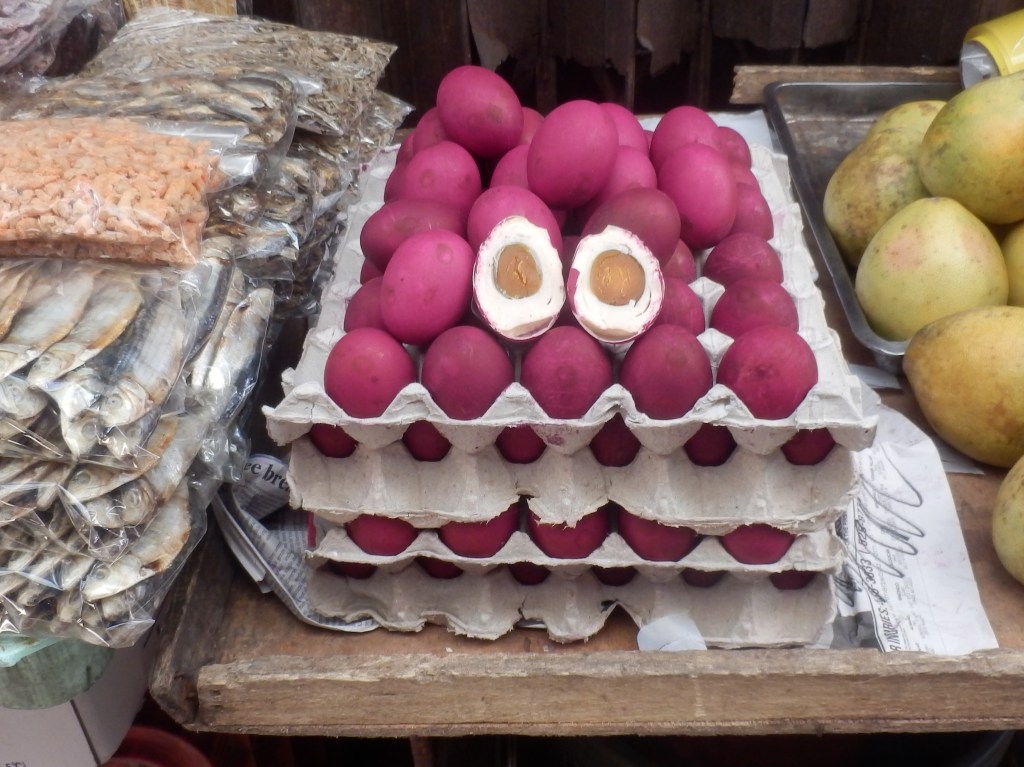
If travel teaches you anything, it’s that the world is far stranger, tastier, and more surprising than you expect. My 2017 trip to the Philippines proved exactly that. I arrived in Manila, jet‑lagged but buzzing, and within hours I’d met an incredible group of fellow travellers — the kind of people who feel like old friends by day two. And then there was Bryan, our guide, who somehow managed to be part leader, part comedian, part therapist. He’s still a good friend today.
But while the landscapes were unforgettable — and occasionally terrifying — the real star of the trip was the food. The Philippines doesn’t just offer meals; it offers dares, stories, and memories disguised as snacks. This is the story of how I learned to eat like a local… even when my knees were shaking from the heights.
Banau Rice Terraces: Beautiful, Ancient, and Absolutely Terrifying
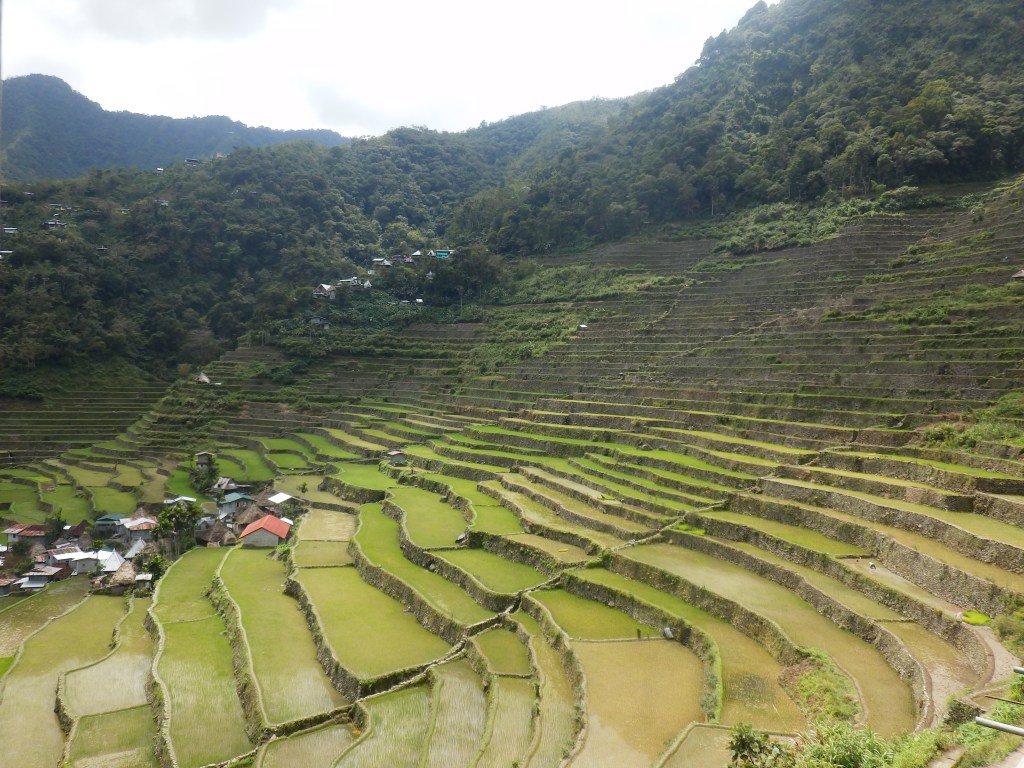
Our first major stop was the legendary Banau Rice Terraces — carved into the mountains by hand over 2,000 years ago. They’re breathtaking, but if you have a fear of heights like I do, they’re also a mild form of torture.
The paths were narrow, slick, and edged with drops that made my stomach lurch. At one point, I swear the ledge was no wider than my foot. Bryan kept saying, “Don’t look down,” which of course made me look down every single time.
But even here, clinging to a cliffside, food found us.
The First Food Challenge: “Etag”
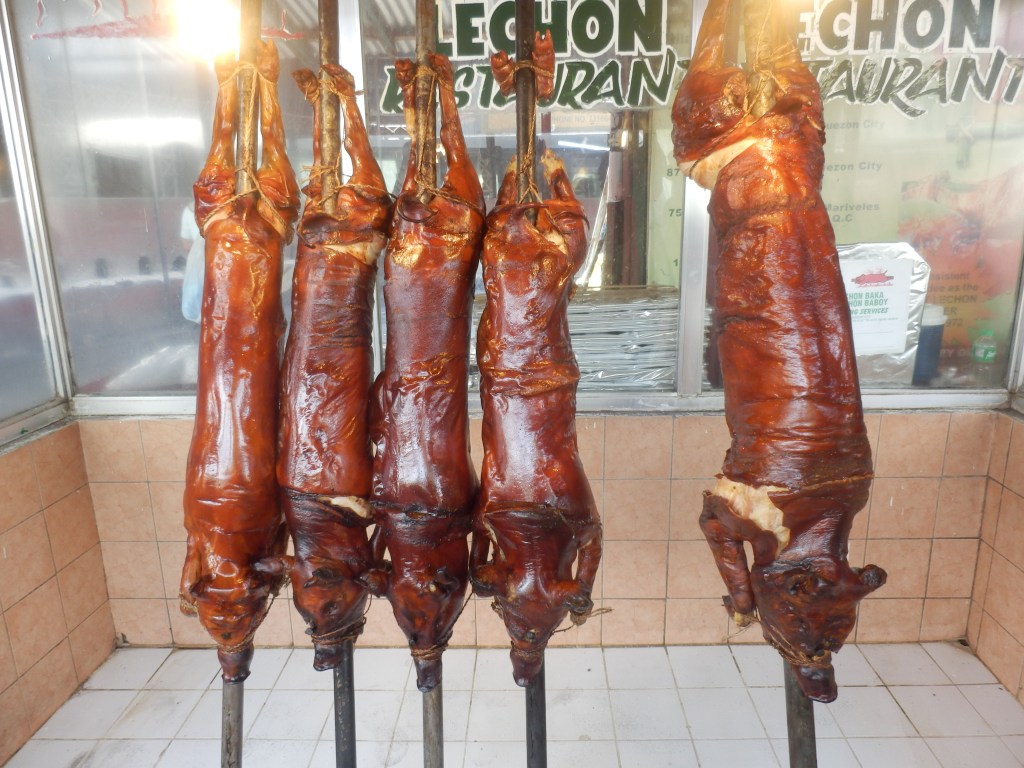
- Etag — a traditional smoked, salted pork — was offered to us by a local farmer.
- It’s pungent, earthy, and tastes like it’s been aged in the mountains themselves.
- I ate it while trying not to think about the drop behind me.
It was the first hint that Filipino cuisine doesn’t shy away from bold flavours.
Puerto Princesa: Underground Rivers and Underground Snacks
From the mountains, we flew to Puerto Princesa — home to the famous Underground River. But while the caves were stunning, the street food outside was even more memorable.
Tamilok: The “Woodworm” That Isn’t a Worm
This was the moment I realised the Philippines plays by its own culinary rules.
- Tamilok is a mollusc harvested from mangrove wood.
- It looks like a long, grey ribbon.
- It’s eaten raw.
- And yes, it slides down your throat exactly the way you think it does.
It tasted surprisingly like oysters — briny, silky, and slightly sweet — but the mental battle was real.
El Nido: Paradise With a Side of Balut
El Nido is the kind of place that makes you believe postcards are real. Turquoise water, limestone cliffs, sunsets that look Photoshopped. But even paradise has its challenges.
Balut: The Legend
You can’t talk about Filipino food without mentioning Balut — the infamous fertilised duck egg.
I’d heard the stories. I’d seen the reaction videos. But nothing prepares you for holding a warm egg, cracking it open, and seeing… well… everything.
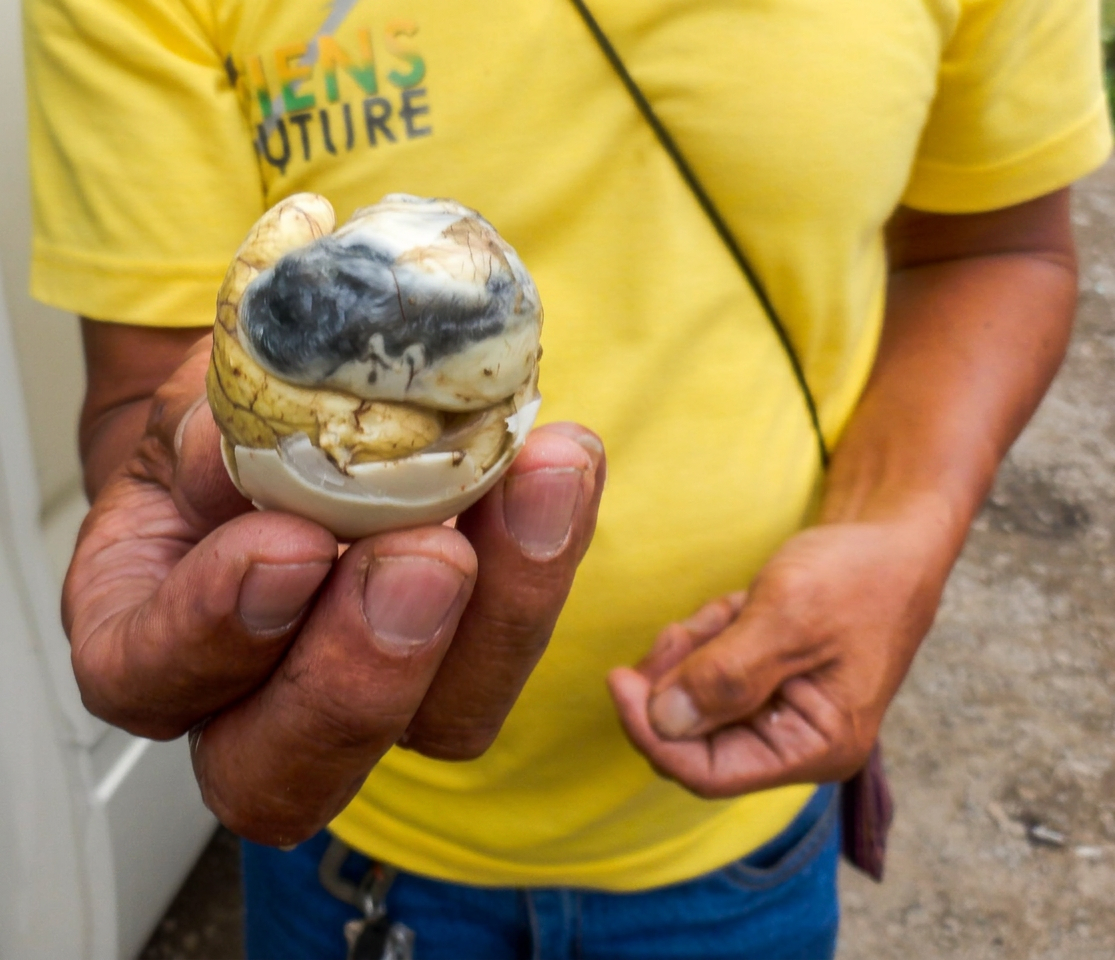
The broth was delicious — rich and savoury. The rest? Let’s just say I earned my traveller badge that night.
Palawan: Island Hopping and Unexpected Delicacies
Palawan was the final stretch of the trip — a dreamscape of lagoons, coral reefs, and quiet beaches. But even here, the food adventures continued.
Crocodile Sisig
- A twist on the classic Sisig, but made with crocodile meat.
- Chewy, smoky, and surprisingly good with a cold beer.
Halo-Halo
After all the daring dishes, I needed something comforting. Enter Halo-Halo — a colourful, icy dessert that feels like a celebration in a bowl. Sweet beans, purple yam, shaved ice, condensed milk… chaotic but perfect.
What This Trip Taught Me
Travel isn’t just about seeing new places — it’s about tasting them, too. The Philippines challenged me in every way:
- My fear of heights was tested in Banau.
- My courage was tested in Puerto Princesa.
- My stomach was tested in El Nido.
- My sense of adventure was rewarded in Palawan.
And through it all, the food told the story of a country that is bold, generous, surprising, and full of heart.


Leave a comment